

1. The finished piece, ready to bind off.

2. Knit 2 stitches

3. Knit the next 2 stitches together through the back loops
(k2togtbl)

4. You now have 3 stitches on your right-hand needle

5. Slip the 3 stitches from your right-hand needle purlwise to the left-hand needle. (Note that this photo is after a few stitches have been bound off.)

6. Repeat (k2, k2togtbl, slip 3 sts to left-hand needle), until 3 stitches remain on each needle.

7. Cut yarn leaving a 6-inch tail. Turn right-hand needle away from you and hold behind left-hand needle
Graft the two ends together using Kitchener stitch (follow steps 8-12 if you are unfamiliar with Kitchener stitch).

8. Run the yarn tail through the first stitch on the front needle purlwise, leaving the stitch on its needle

9. Run the yarn tail through the first stitch on the back needle knitwise, leaving the stitch on its needle

10. Run the yarn tail through the first stitch on the front needle, knitwise, letting the stitch fall from its needle

11. Run the yarn tail through the first stitch on the front needle purlwise, leaving the stitch on its needle

12. Run the yarn tail through the first stitch on the back needle, purlwise, letting the stitch fall from its needle

13. Run the yarn tail through the first stitch on the back needle knitwise, leaving the stitch on its needle
Repeat steps 10-13 once. Repeat step 10. Repeat step 12. Gently tug on the new stitches to even them out. Weave in ends and block.

Before blocking

After blocking



 3. Knit into the back of the same stitch and let the original stitch fall from the left-hand needle. You have just performed a kfb, or knit into the front and back of a stitch, increasing your stitch count by one.
  4. Knit 2 stitches.
 5. Slip 3 stitches, purlwise, from your right-hand needle to your left-hand needle.
  Repeat steps 2-5 until you have the desired number of stitches. Don’t forget to include the 3 i-cord stitches when counting your total. When you have the required number of stitches, don’t slip the 3 stitches back to the left-hand needle. Just turn your work and start knitting. I like to start with a wrong-side row because I think the other side of the i-cord cast-on looks nicer, but that’s just my preference.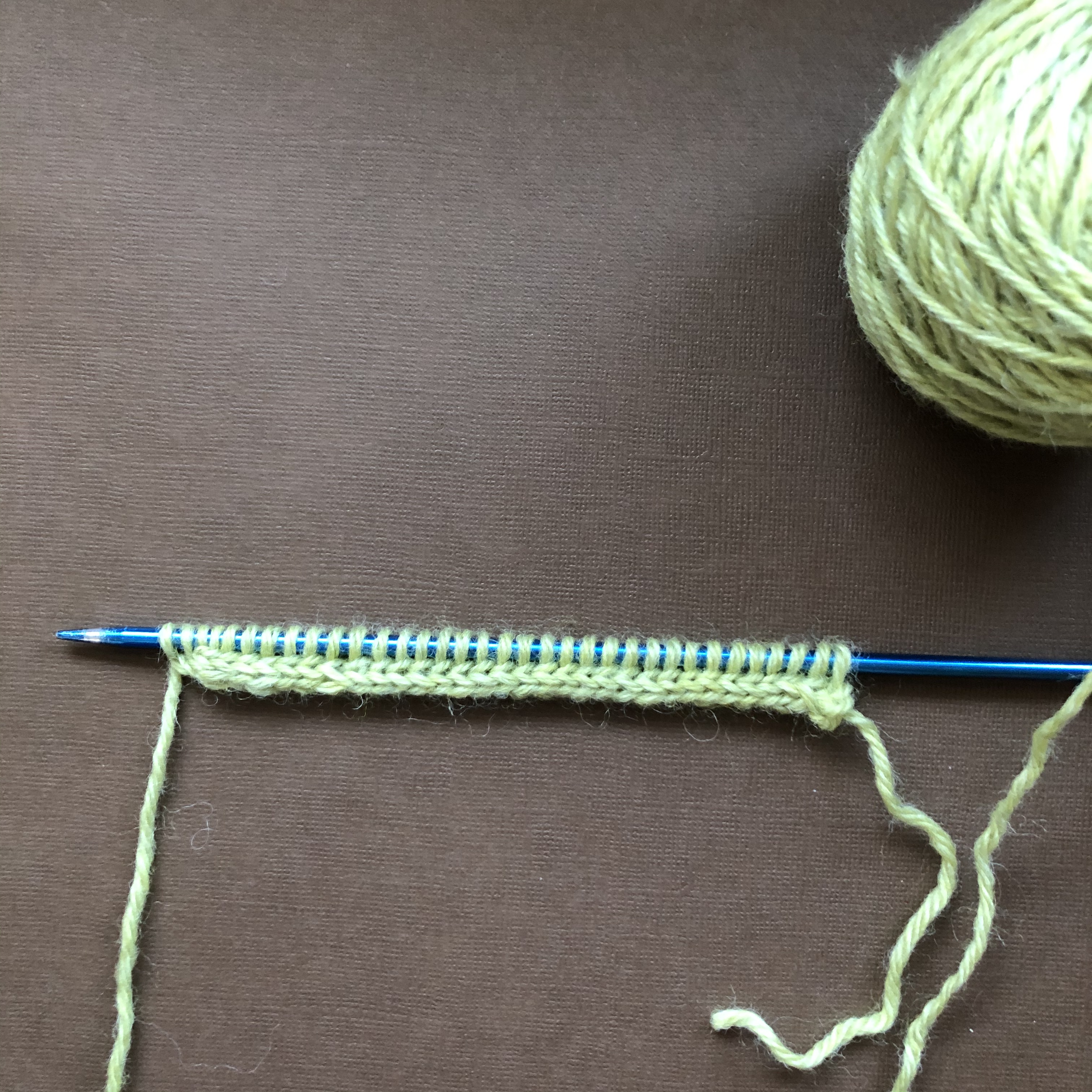

 Kelly Spenhoff